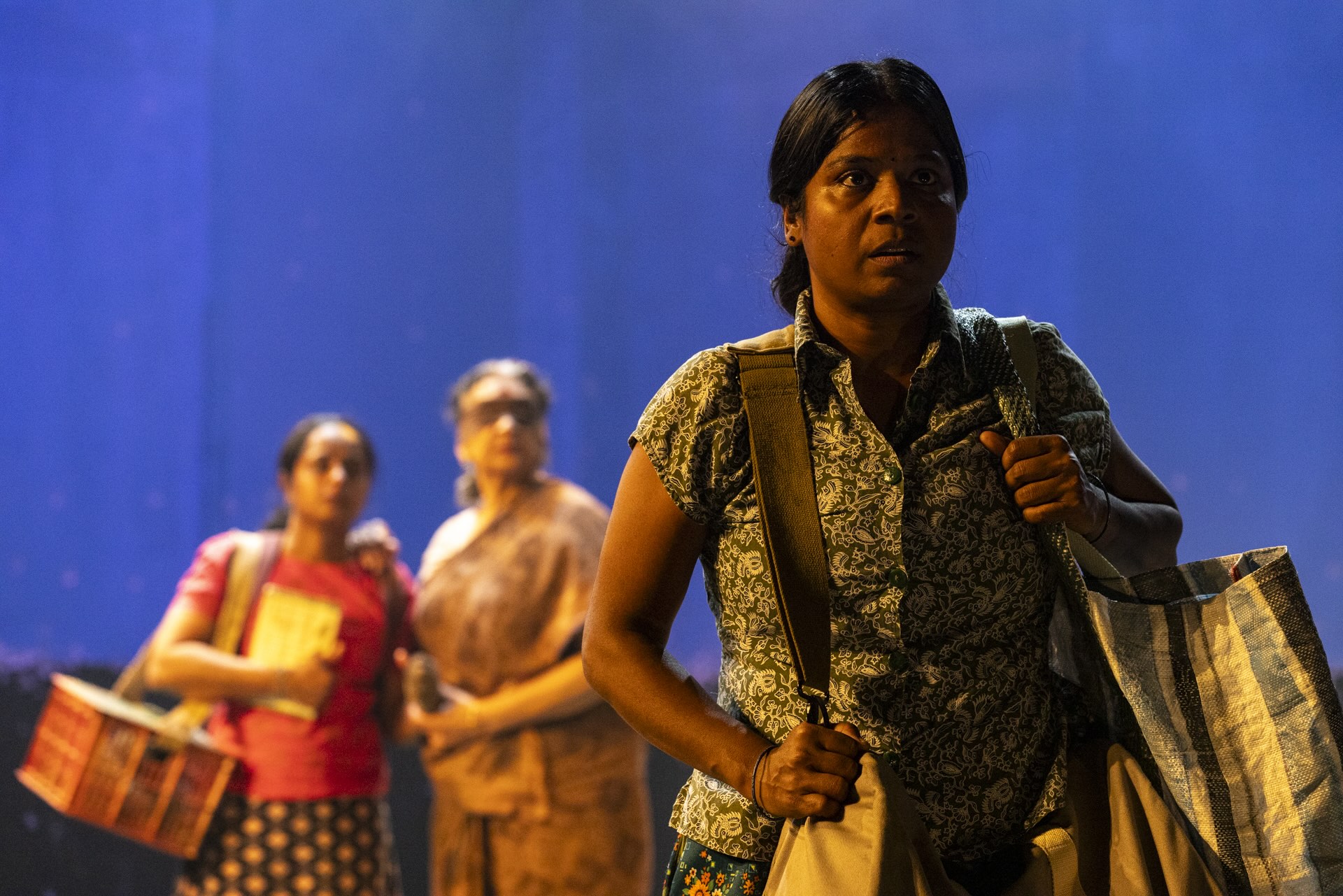
S. Shakthidharan is regarded as one of Australia’s greatest playwrights of recent decades and so the return of The Jungle and the Sea was one of the most anticipated productions on Belvoir’s calendar this year after the runaway success of Counting and Cracking, which has won awards and broken records around the world, with a Broadway run being a particular highlight and a planned season in Sri Lanka next year. The Jungle and the Sea takes on similar themes and a similar structure, as the play follows a Tamil family attempting to survive the conflict between the Sri Lankan government and the Tamil Tigers against the backdrop of civil war.
Like Counting and Cracking, there is a huge amount in this production and, in attempting to convey a multigenerational, multitemporal and truly global story, the play runs for nearly three hours with two intervals, meaning it is a huge undertaking for the cast and the audience. With that said, a lot of material has been cut since the original production after reviews noted that it was far too long, particularly towards the end. This has meant that although the play is still lengthy, it feels much tighter and more carefully constructed, which is absolutely to its benefit.
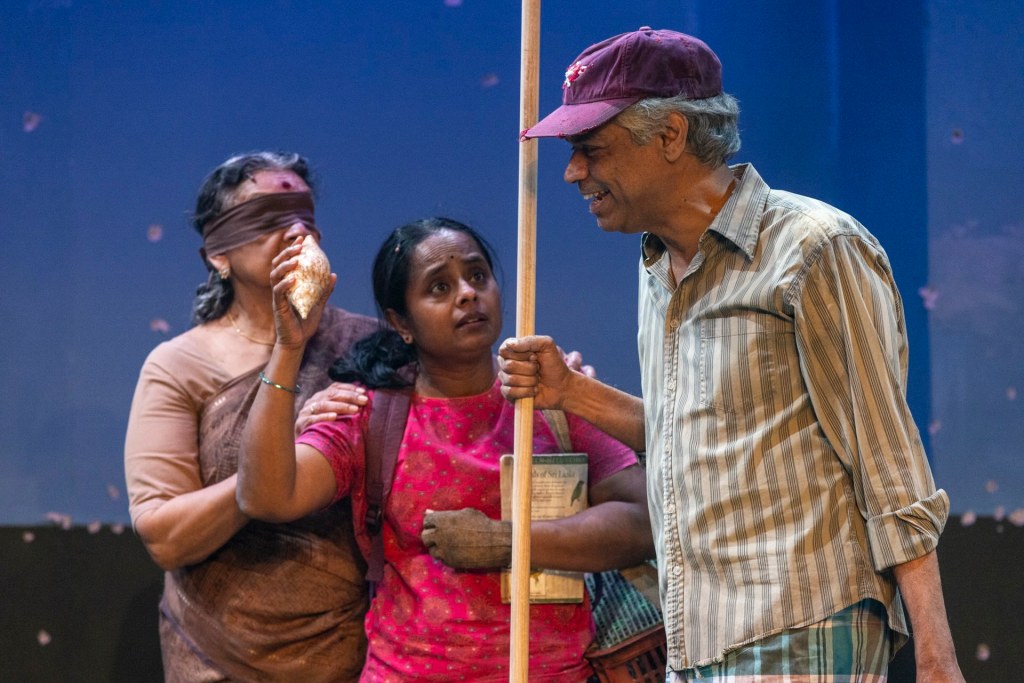
The play centres around a mother whose family all suffers from the oppression of Tamils in Sri Lanka. Her son feels compelled to join the Tamil Tigers while her other children all become involved in the conflict. At the beginning of the play, she blindfolds herself, saying she will only remove it when her children are reunited and at the end of the play, with only one daughter, who has moved to Australia, still alive, she finally removes the blindfold to reveal a desolate and devastating scene.
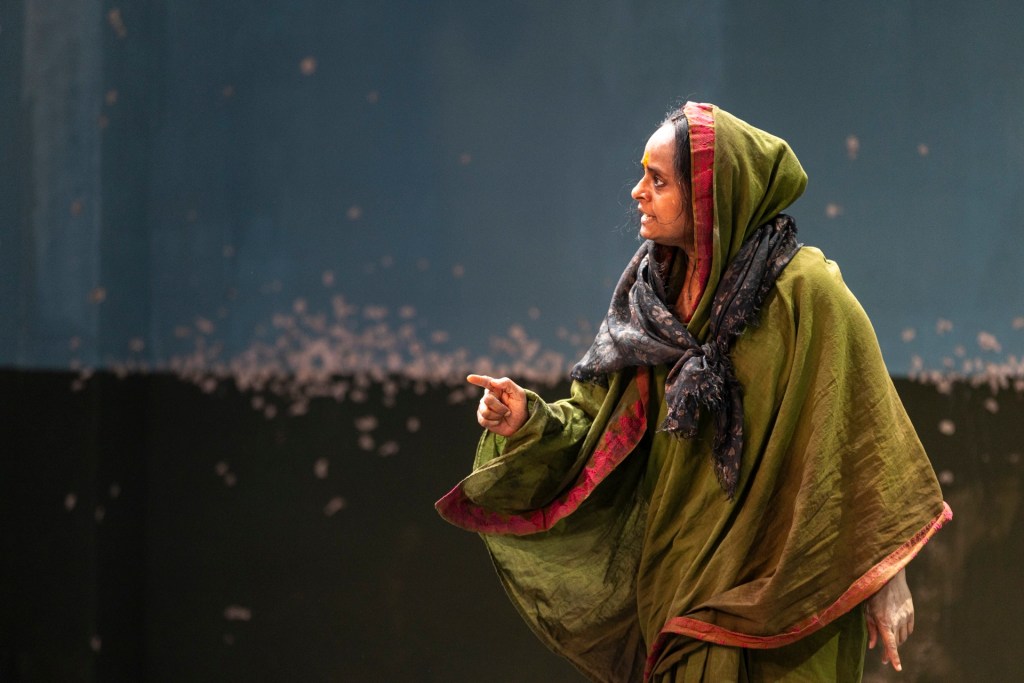
Like Counting and Cracking, the power of this play lies in its emotional poignancy, with the audience deeply empathising with the plight of the mother and indeed the entire family. While this production is perhaps more singular in focus and less layered than Counting and Cracking, it still packs the same emotional punch as it explores the vagaries and senselessness of war while at the same time maintaining moments of humour and love to continually interrupt the tragedy, reminding the audience of the ordinary lives and relationships that war threatens to destroy. There is perhaps more reflection in this play about the senselessness of conflict and a greater resonance with contemporary conflicts around the world, giving it an even broader emotional impact in some ways, which is something that S. Shakthidharan referred to in his discussion to promote the play with Eamon Flack last month.
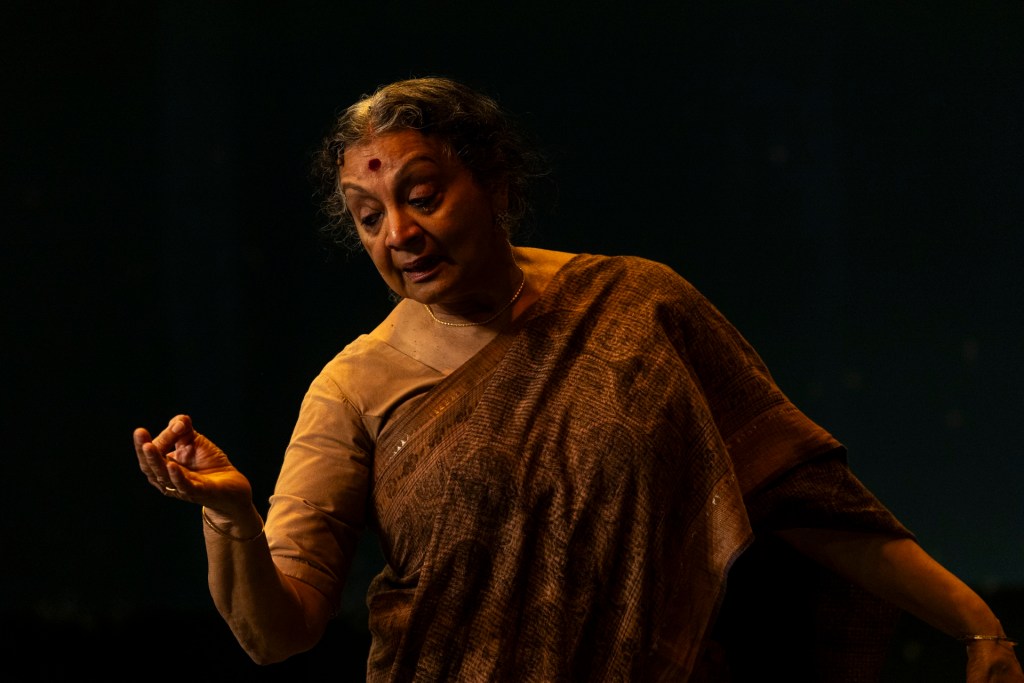
The acting in this production is outstanding, with Anandavalli delivering an extraordinary performance as the matriarch of the family as even with relatively little dialogue, her presence is keenly felt throughout the entire production and she carries almost all of the show’s emotional weight. Additionally, Prakash Belawadi as Siva and Emma Harvie as Lakshmi are excellent, particularly in their scenes together, which provide much-needed humour and warmth amid the devastation unfolding around them. With that said, there is perhaps a criticism to be made that these scenes border on stereotype at times, with the line that Siva can accept Lakshmi as atheist or gay but not both feeling somewhat reductionist and playing into unnecessary stereotypes.
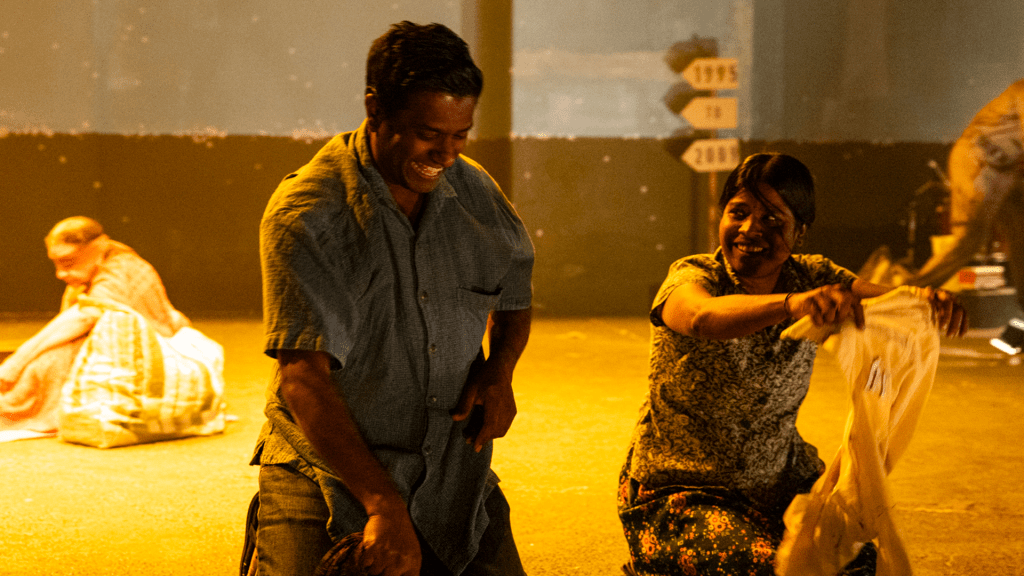
Dale Ferguson’s set is extraordinary, with a rotating turntable creating constant movement throughout the production. This gives the play an energy and frenetic pace that reflects the chaos of war while ensuring the audience remains engaged throughout the lengthy runtime while the physical movement of the actors across the revolve adds another layer to the storytelling, helping transitions flow seamlessly between different places and time periods. The whole cast, including the ensemble of Nadie Kammallaweera, Kalieaswari Srinivasan Shiv Palekar, Dushan Philips and Rajan Velu, all do an excellent job of maintaining interest throughout the production while the live music of Arjunan Puveendran and Indu Balachandran adds enormously to the atmosphere, grounding the production in passion and identity while heightening both its quieter moments and its emotional climaxes.

Overall, this is another remarkable play from Shakthidharan and one of the highlights of Sydney’s theatrical calendar this year. Comparisons to Counting and Cracking will inevitably be made and while this work is perhaps not quite as all-encompassing as the play many have described as the greatest Australian play of the 21st century, it is not far behind, with the changes made to tighten and streamline the play having paid off significantly, resulting in a much stronger and more compelling production. To think that this production has opened without a hitch after the devastating Belvoir Street Theatre factory fire, which destroyed almost the entire set, is no mean feat and everyone involved deserves enormous credit. At a time when there is so much debate about what multiculturalism means in Australia, it is so important to have stories like this on Australian stages. While deeply rooted in one experience of the Sri Lankan Civil War, The Jungle and the Sea ultimately feels like a universal story about love and the human cost of conflict. An absolute must-see on Sydney’s theatre calendar.
Rating: ★★★★1/2
The Jungle and the Sea plays at the Belvoir St Theatre until 2 August 2026. For more information, click here.
All photo credits: Brett Boardman

 Musicaltheatre.au - Australian music and theatre reviews