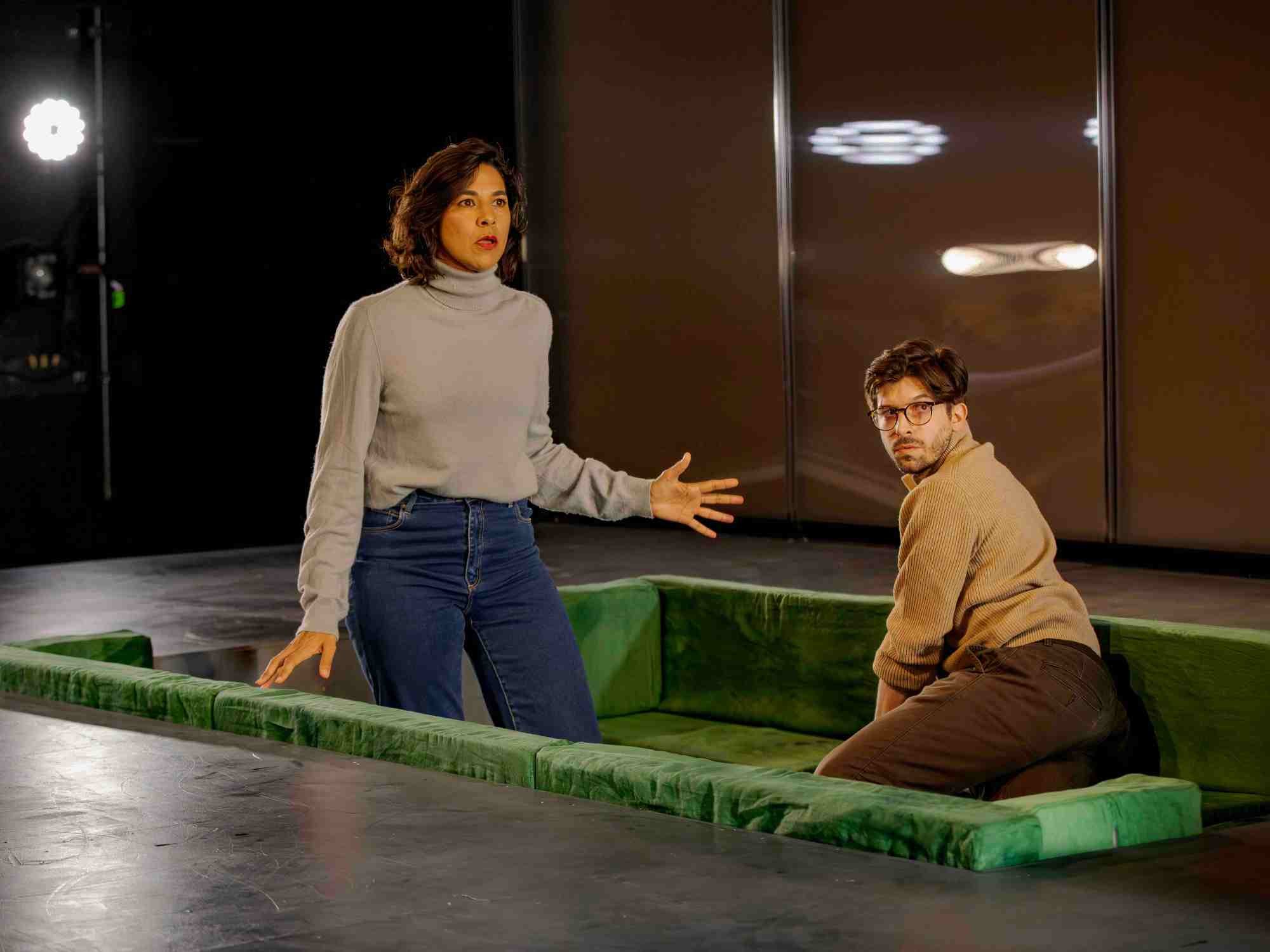
Plays at the Seymour Centre are always interesting and intriguing and Shooting Hedda Gabler, as the latest in Secret House’s season, was no exception, with a truly wacky and confronting plot. Taking on Nina Segal’s play Shooting Hedda Gabler, which is based on a Norwegian film crew filming a movie adaptation of Henrik Ibsen’s Hedda Gabler, the show might sound simple at first glance but it is anything but, turning into a forensic study of coercive control, obsession and abuse as director Henrik hires an out-of-work former child prodigy to join his cast of Norwegian actors, resulting in a work where it feels as though the action in the play is being lived out outside of the play as well.
This kind of metatheatre is a really interesting concept and can be quite effective but in this production it doesn’t feel fully fleshed out in its execution. The show jumps from scene to scene without a great deal of clarity and the eventual payoff at the end of the production feels quite obvious, with not much substance beyond it to really bring weight to the story. The premise is exceptional and something that really has the potential to be transformative in its execution but given how prevalent the topics of coercive control and obsession are and the theatrical possibilities of exploring them, this does feel kind of flat in that regard. While the script clearly establishes Henrik’s manipulation and Hedda’s vulnerability, it never fully develops the psychological tension between them to the point where it becomes truly unsettling, and so instead of feeling like a slow and insidious descent into abuse, much of the relationship is presented at a surface level, almost harking back to the film Whiplash rather than the more devious interpretation that the script seems to be going for.
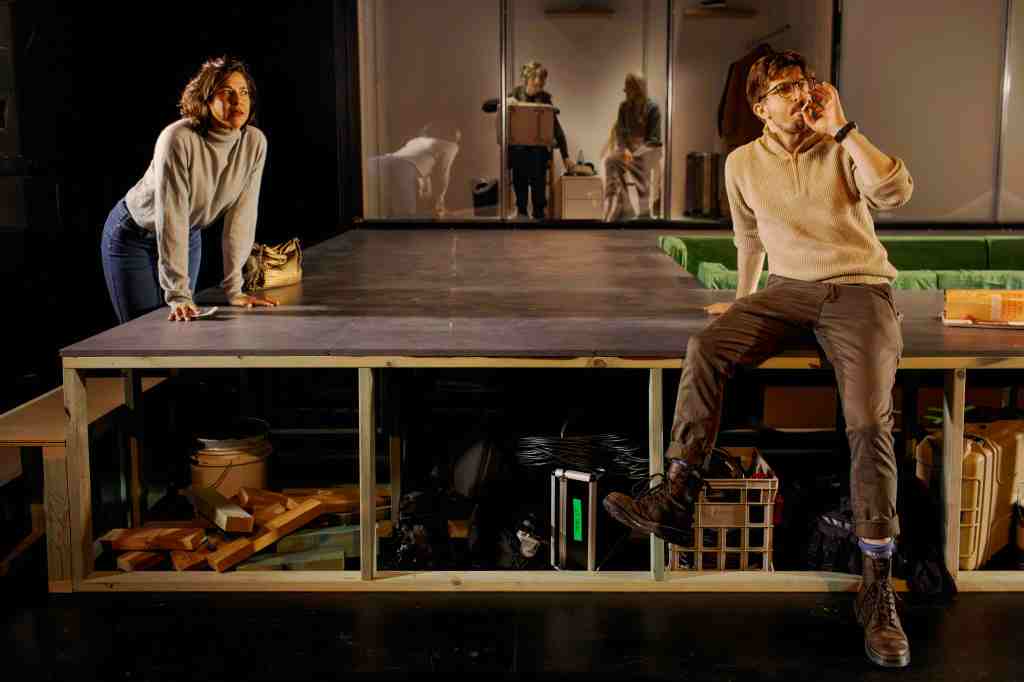
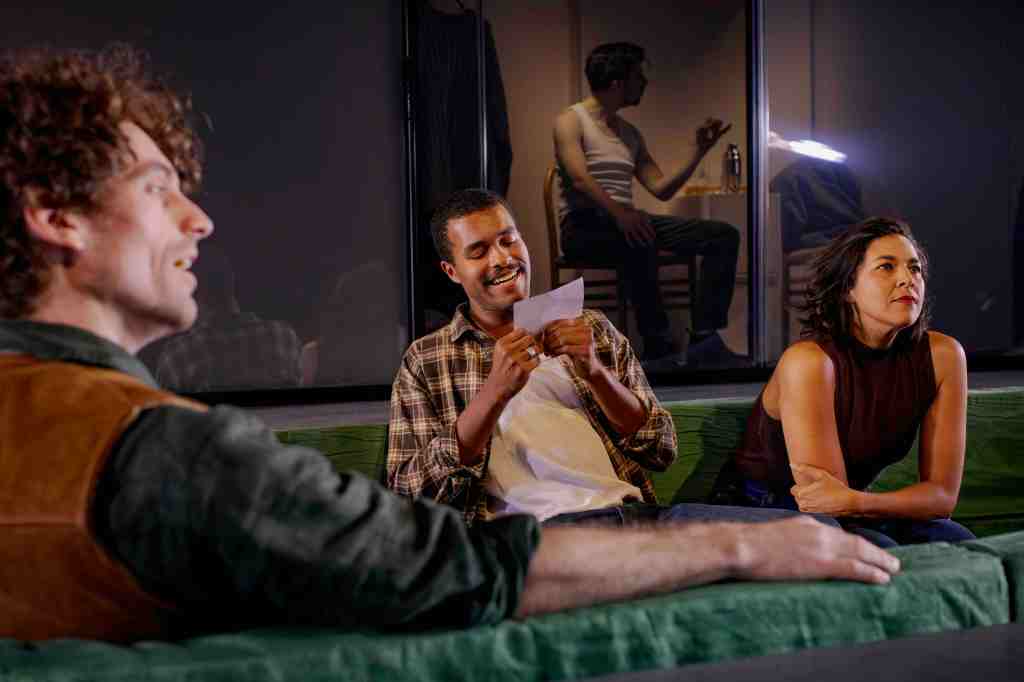
The performers on stage all do a decent job, with Jennifer Rani arguably the strongest in the cast as Hedda, as she embodies the descent from child star to failing actress and the impact that has had, with a fragility to her performance that helps sell the character’s desperation to reclaim her former success. Lib Campbell also does a great job as Thea, bringing a lot of the humour to the show as both an actress and the on-site therapist and intimacy coordinator, with some truly hilarious lines with the audience revelling in the absurdity to break up some of the more dark moments in the script. Alpha Sylla as Ejlert and Jane Angharad as Berta are also strong, while Matthew Abotomey provides some funny moments as Jorgen while James Smithers rounds out the cast as Henrik and gives the character an underlying sense of authority and self-importance, although the script never quite allows the role to become as menacing as it perhaps needs to be to have its full impact.
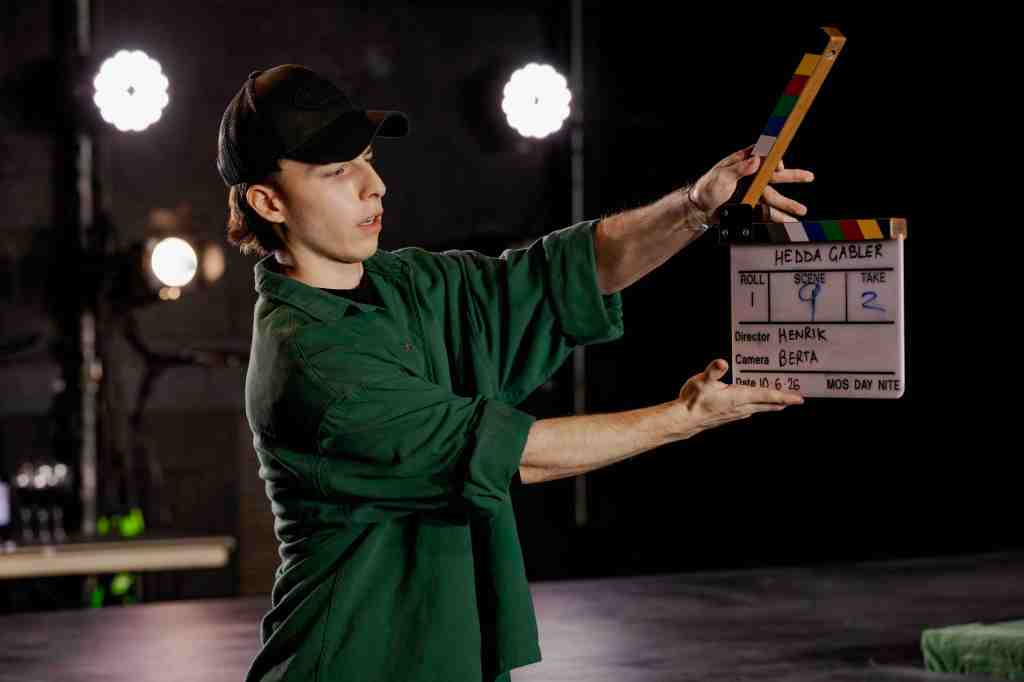
While the acting is strong, some of the Norwegian accents leave a lot to be desired, which does break focus at times, with Australian accents slipping in at many points. Some of the acting also lacks the viscerality of the set, which makes it a little difficult to fully engage with the plot in the way the script intends. Smithers also serves as set designer and does a great job creating a strong set, complete with frosted doors and a sunken couch, with the design effectively capturing both the sterile environment of a film set and the emotional isolation at the centre of the story. With that said, on opening night there were a few hiccups with the camera placement for the onstage filming, which was sometimes a little off, as well as some set elements breaking down at various points. While the filmic elements of the show were appreciated and indeed seemed to reference the Kip Williams style of incorporating live film into theatre, which is quite groundbreaking and has become almost quintessentially Sydney theatre, the technique has started to become overused and, in this case, the single camera really only showed the same view that the audience already had for the majority of the show, meaning the metatheatrical effect was lessened significantly.
Overall, this is an interesting play with a really intriguing concept but the script and some of the commitment in the acting hold it back at times. There are some funny moments and some powerful moments, but given the strength of the central idea, it is a shame that the execution doesn’t quite land as effectively as it could, resulting in an ending with less impact than it possibly could have. Nevertheless, it remains a thought-provoking production and one that could certainly be built upon in the future, with a premise definitely worth exploring.
Rating: ★★★
Shooting Hedda Gabler plays at the Seymour Centre until 27 June. For more information, click here.
All photo credits: Phil Erbacher


