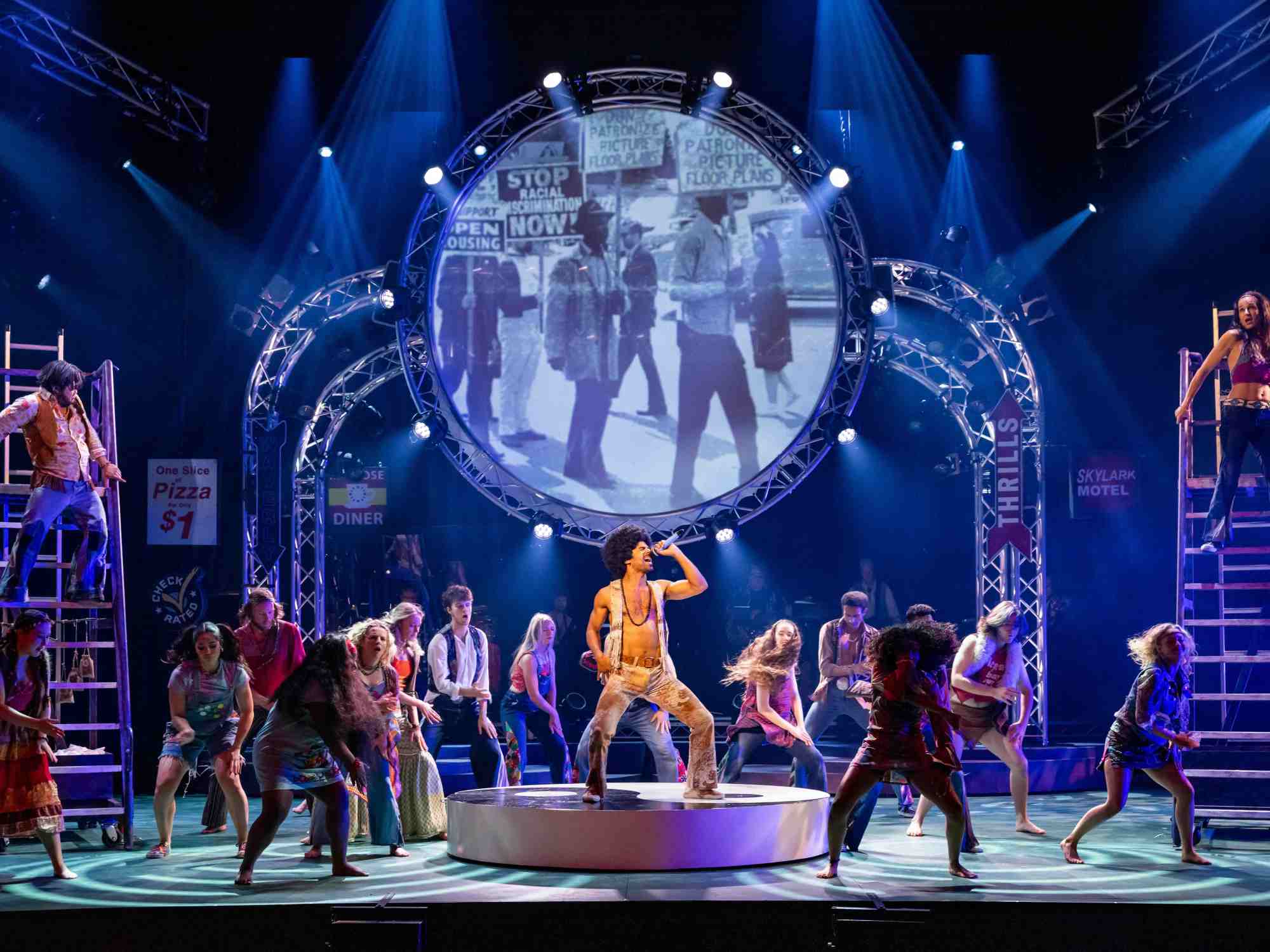
Hair is one of the defining musicals in musical theatre history, having first opened on Broadway in 1968 and continuing to resonate with audiences almost 60 years later while serving as a major inspiration for Rent, Jesus Christ Superstar and many other rock musicals that followed. The Theatre Royal was packed for this production, which toured around the country last year and has finally arrived in Sydney to much fanfare and excitement.
The musical centres around a group of young dreamers caught up in the flower power social revolution and protesting against the Vietnam War while embracing the hedonism of drugs and sex that some parts of the era espoused. In keeping with this, while there is a backdrop involving the lead character being conscripted, there isn’t really a traditional plot to the show, with the musical instead focusing on capturing the spirit and zeitgeist of the time, which is driven through the music. Songs such as “Aquarius”, “Good Morning Starshine”, “Hair” and “Let the Sunshine In” remain enduring classics and are the primary force propelling the production forward, with the audience really being allowed to revel in the wonderful music. This does mean that the first act, which lacks some of the show’s strongest musical numbers, drags at times and much of the emotional weight arrives in the second act, where the stronger songs and more cohesive narrative arc allow the audience to connect more deeply with the material.
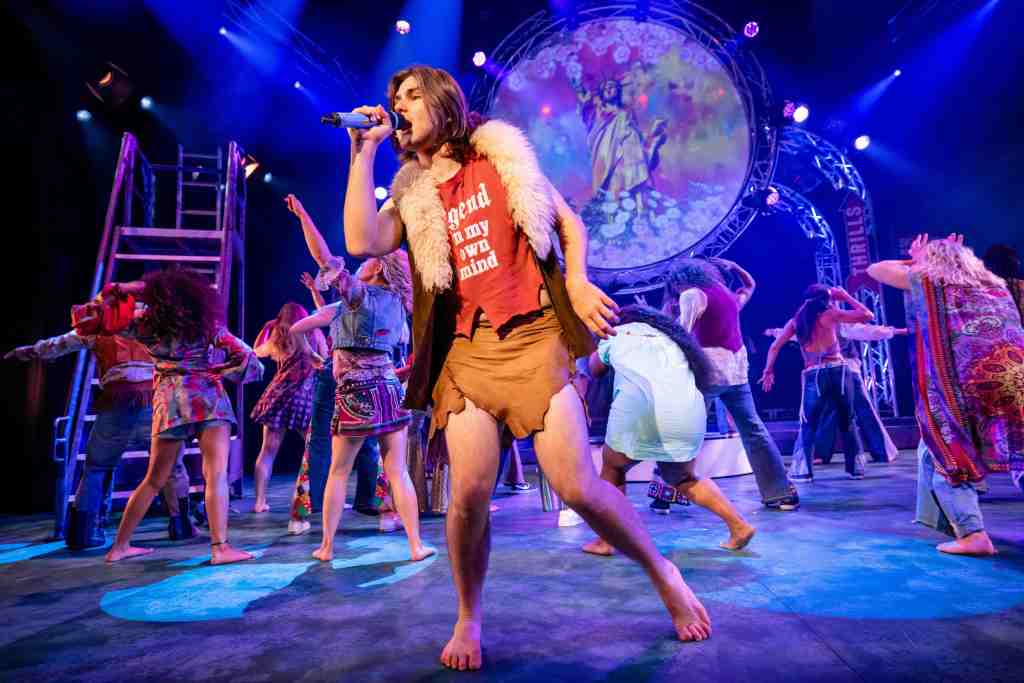
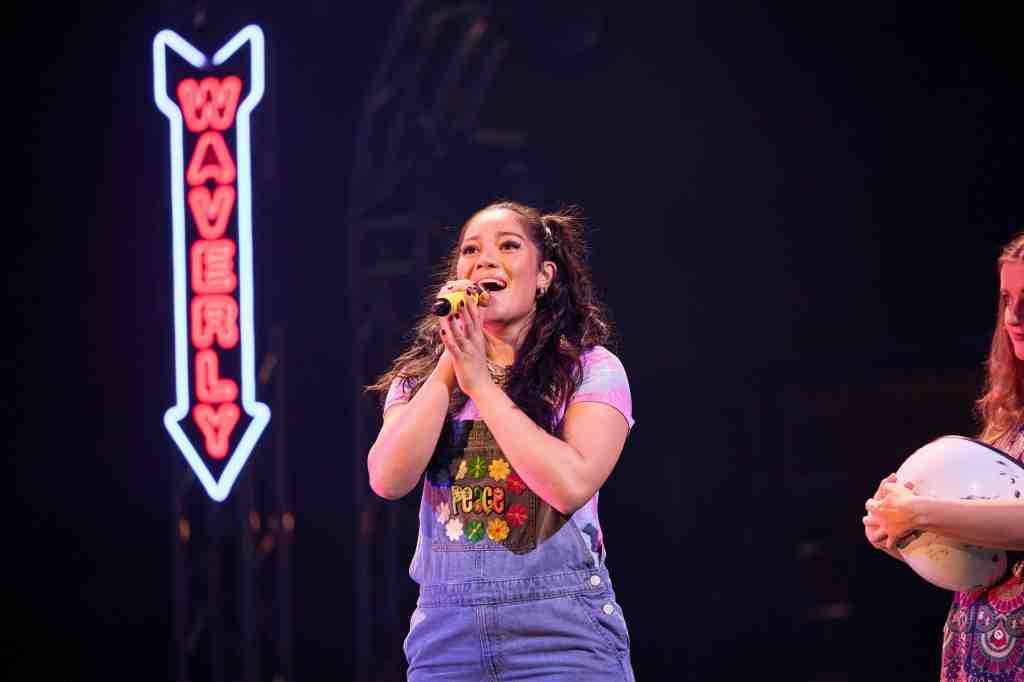
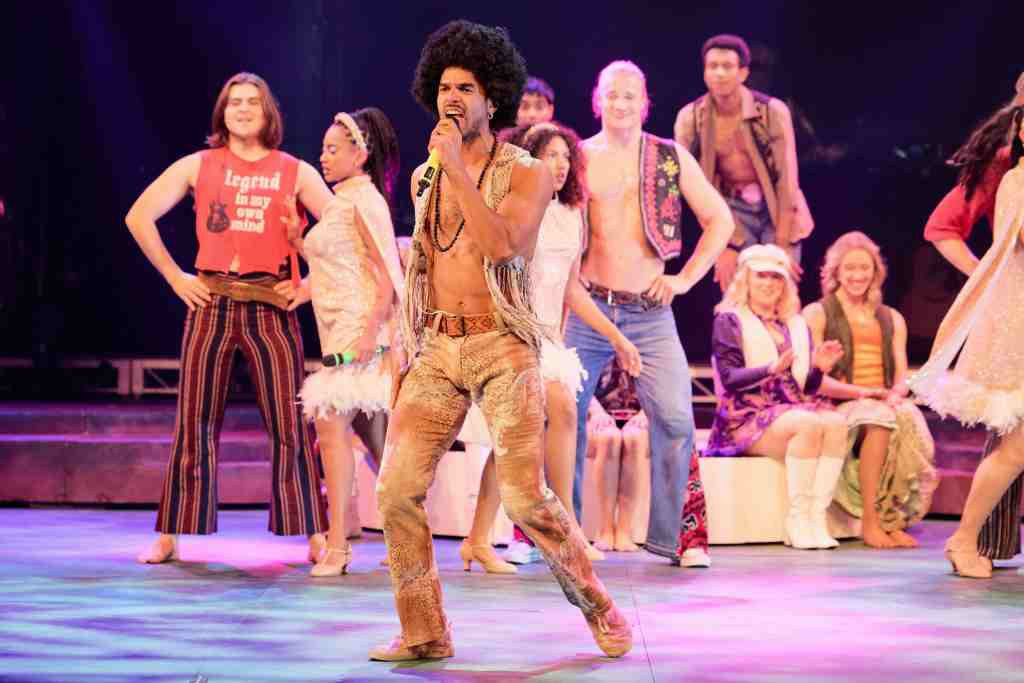
This cast, which was assembled by The Australian Shakespeare Company, brought a strong acting foundation to what is a challenging show, with Alex Cooper, Maxwell Simon, Jackson McGovern and Elizabeth Brennan all delivering powerful performances and successfully capturing the free-spirited nature of their characters. However, while the acting was consistently strong, not all of the performers were singers by training and that did occasionally show through both the ensemble vocals and some of the lead vocal performances, leading to some inconsistency. With that said, Maxwell Simon did an excellent job as Berger, demonstrating impressive vocal ability alongside his commanding stage presence while the highlight of the evening was Mariah Lewy’s gorgeous rendition of “Frank Mills”, which received one of the biggest reactions of opening night and brought a much-needed emotional lift towards the end of the first act.
Many of the production elements were very strong, with Harrison Cope’s lighting design effectively capturing the psychedelic aesthetic of the era, while the broader production design created an immersive and energetic environment, bringing a genuine sense of joy and optimism to the performance. On opening night, the cast returned for an encore of “Let the Sunshine In” and it was a fun end to the night, allowing the audience to get up and dance and to share the moment with the cast.
Hair has always been a show designed to shock, with an infamous scene with full frontal nudity at the end of the first act drawing a great deal of discussion over the years. Similarly, discussions of race, protest and dissidence were among the elements that made it groundbreaking when it premiered and while these themes may not be as novel now, they remain an important reflection of the era and many of the themes continue to hold relevance today.
It was therefore quite disappointing that one aspect of this production stood out for the wrong reasons. A scene added specifically for this version featured two actors, one of South Asian heritage and one who is not, performing exaggerated Indian accents while donning cricket bats and wearing moustaches. The scene was not part of the original script and felt both jarring and uncomfortable within the broader context of the production. While I do not believe there was any malicious intent behind its inclusion, I found the choice deeply disappointing. Given that at this very moment, one of the biggest stories in the current news cycle concerns a content creator profiting from horrendous videos targeting the South Asian community (among many others) by using the same exaggerated accents and stereotypes as in this scene, the decision to include such a caricature felt unnecessary. One cannot consider this scene to be a relic of a period piece if the scene was not in the original script.
As one of the few theatre critics in Australia of South Asian heritage, I acknowledge that my response may be influenced by my own lived experience. However, this was a moment that I struggled to reconcile with the otherwise positive atmosphere created on stage, meaning that I left feeling shocked and a little disheartened that such a scene was not only included in this production, but was added specifically to this show. While Director Glenn Elston said in a statement which is published in full at the end of this review that the scene is part of a dreamlike psychedelic sequence and “reflects an awareness of the issue [of adopting a caricature] rather than an endorsement”, this felt like a joke at the expense of a marginalised community, albeit unintentionally, rather than a light-hearted reimagining of the original script.
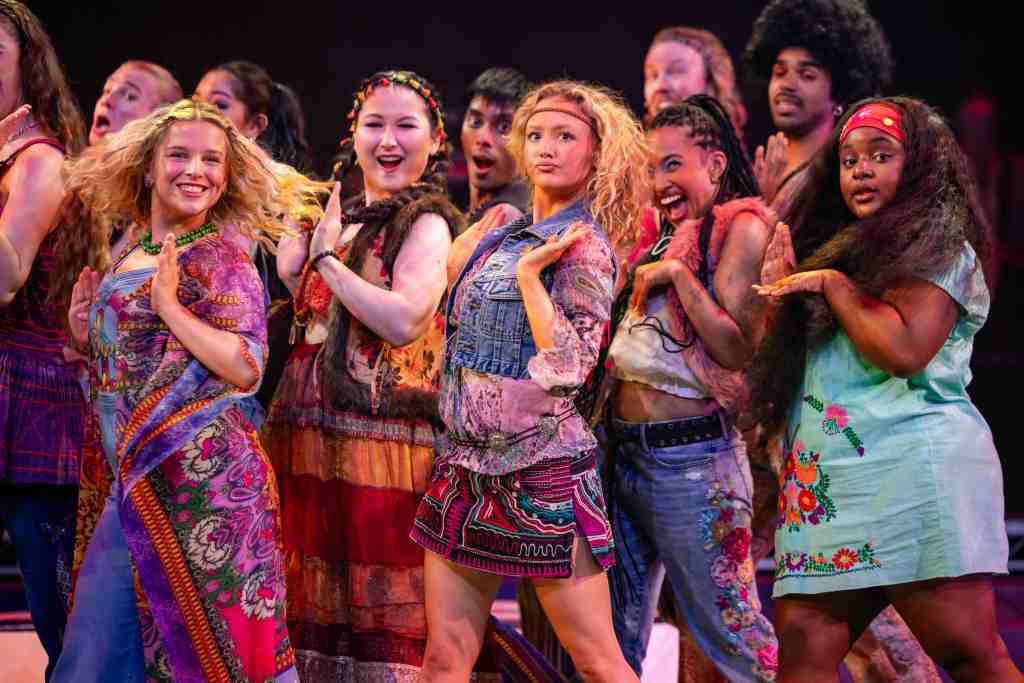
Overall, Hair remains a fascinating musical that occupies a unique place within the musical theatre canon. While aspects of the show inevitably reveal its age, its themes of identity, freedom, protest and community continue to resonate. The acting throughout this production is consistently strong and there are several standout musical moments, particularly from Maxwell Simon and Mariah Lewy, even if the vocal performances are not always as consistent as the dramatic work. The tension between these strengths and my concerns outlined above leaves me in an unusual position as a reviewer. I do not feel it would be fair for the cast to be judged solely on the basis of a creative decision that sits outside their control yet it would also be wrong to ignore this completely. For that reason, I have chosen not to award a star rating.
This is ultimately an engaging production that deserves to find an audience beyond traditional musical theatre fans and there is much to admire in the performances, the design and the spirit of the show itself. However, I hope the production team reconsiders the inclusion of the added scene, as I have never encountered something like it in my years reviewing theatre and I really do hope that it is not something that I see again.
Editor’s Note: In response to the concerns raised by musicaltheatre.au, Director Glenn Elston said the following:
“This sequence takes place within Claude’s LSD hallucination and is part of the show’s exploration of a mind in a completely altered state. Throughout the sequence, people, identities and historical references collide in unexpected and often contradictory ways. The scene is deliberately surreal, fragmented and dreamlike.
In our interpretation, the scene that you’re referring to is not intended as a representation of South Asian people or culture. The scene is built around the absurdity of performance and role-playing, with one of our actors (who is of South Asian heritage) effectively calling out the other (our female actor) for adopting an identity that isn’t her own. The female actor’s embarrassment is part of the joke and reflects an awareness of the issue rather than an endorsement of it.
It was our intention [to] keep it as over the top as the original script but reimagine it for a contemporary Australian audience.”
Hair plays at the Theatre Royal until 12 July. For more information, click here.
All photo credits: Daniel Boud


