
Plays that try to recreate a specific moment that is ingrained in the consciousness of the public are some of the hardest to pull off. Very modern moments have usually been captured by camera and posted on social media, making the idea of a live retelling largely redundant. But even for slightly older moments that move beyond the social media age, there is still the difficulty of making people care for reasons that transcend mere nostalgia. Given this, Melanie Tait had an uphill task on her hands when she attempted to tackle one of the most iconic moments in Australian television history, the death of Molly on long-running soap A Country Practice. The episode that killed off the much-loved character was watched by a sixth of Australia’s entire population in 1985 and is permanently etched in the minds of many. After watching the production, to say that Tait pulled this off would be something of an understatement.
As a child of the 2000s, I was probably one of the only people in the audience on opening night who had not seen A Country Practice during its original run, but this did not really matter with the play stepping through the necessary context, with great credit due to set designer Simone Romaniuk for the clever placement of a cast board centre stage so that the audience never got lost as the performers circled back and forth between characters.
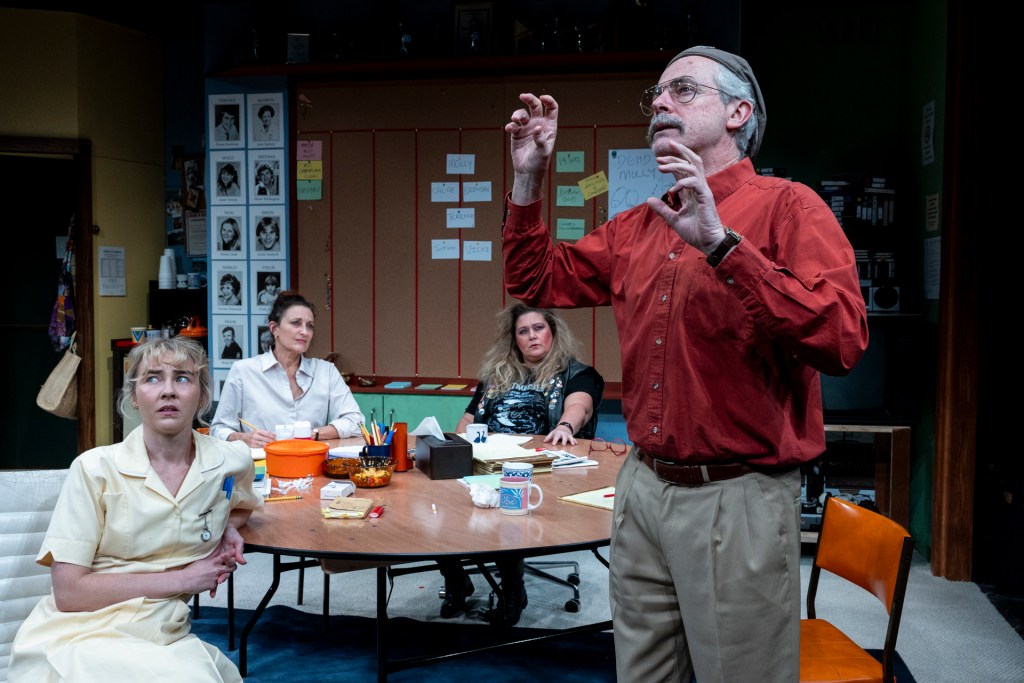
The play is set in a fictional writers’ room where it has been decided that Molly must be killed off the show as her popular actress Anne Tenney wanted to quit the show. For those in the writing room, this was not an emotionless decision as personal connections to the characters and emotional investments in their stories were revealed. In addition, hundreds of fans of the show from around the country were writing in to plead for Molly’s survival. So, the task of killing Molly is placed upon Judith, ably supported by the others in the room.
The play did a fantastic job of endearing the characters in the writing room to the audience, and the actors who brought the characters to life were phenomenal as well. Georgie Parker as Judith brought heartfelt emotion and sensitivity to the role, bringing the audience into her agony about killing the iconic character and sharing a little bit about her character’s life as well. She was ably supported by Julia Robertson who delivered some hilarious gags and sincere moments throughout the production as well as the incredible Amy Ingram who brought the majority of the comedic relief to the show with her larger-than-life persona. Genevieve Lemon and Sean O’Shea rounded out the cast with passionate and emotional performances that ensured that there was a real contrast on stage. It was clever writing and fantastic execution.
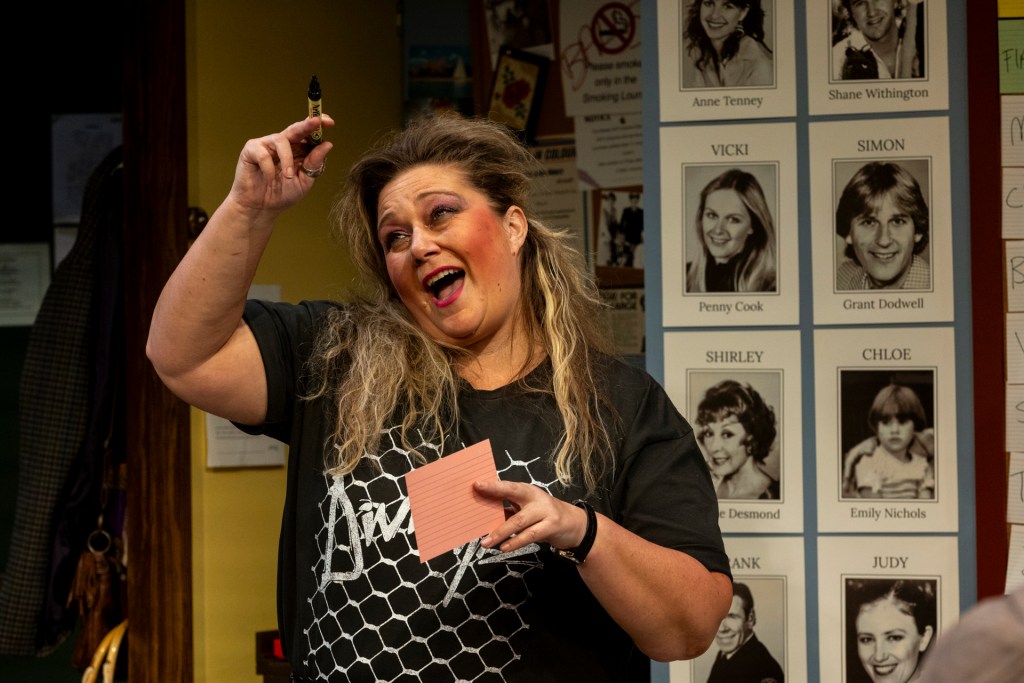
The dialogue was quick-witted and well-paced but perhaps more importantly, the humour in the script really elevated the production. There was a distinctly Australian feel to the humour, and it was so well delivered that the audience were in stitches for large parts of the play. Given the heavy subject matter (even if fictional) of the production, the lightness was much appreciated and really did make the play feel incredible cohesive as a work. There were enough Easter eggs for ardent fans of the show (with the writers foreshadowing a drunk driver car crash death that occurs later in the show) and yet, the show also worked perfectly well as a standalone work. It is a testament to the quality of the script that Tait could bring in an audience and make them care about a character from a television show that some had never seen. Ben Brockman’s lighting design was sensitive and supported the action on stage well while Romaniuk’s costumes were also a wonderfully thoughtful addition.

The only thing missing from the production was the scene of Molly’s death itself. With an audible sigh of nostalgia heard around the room at the start of the production when the theme music played, it seemed fitting that Molly’s final scene would play on the television, perched on the corner of the set, to close out the play. But it didn’t, which made the ending feel ever so slightly hollow. I assumed this might have been a rights issue, but after enquiring, I learnt that Director Lee Lewis actually chose to not include the film clip as “the play focuses on the relationships of the imagined writers in the room.” This certainly makes sense, but given that the play was informed by interviews with the real-life Judith, it perhaps would have been a nice bit of symmetry. With that said, it did not detract at all from what was a truly beautiful and heartfelt production.
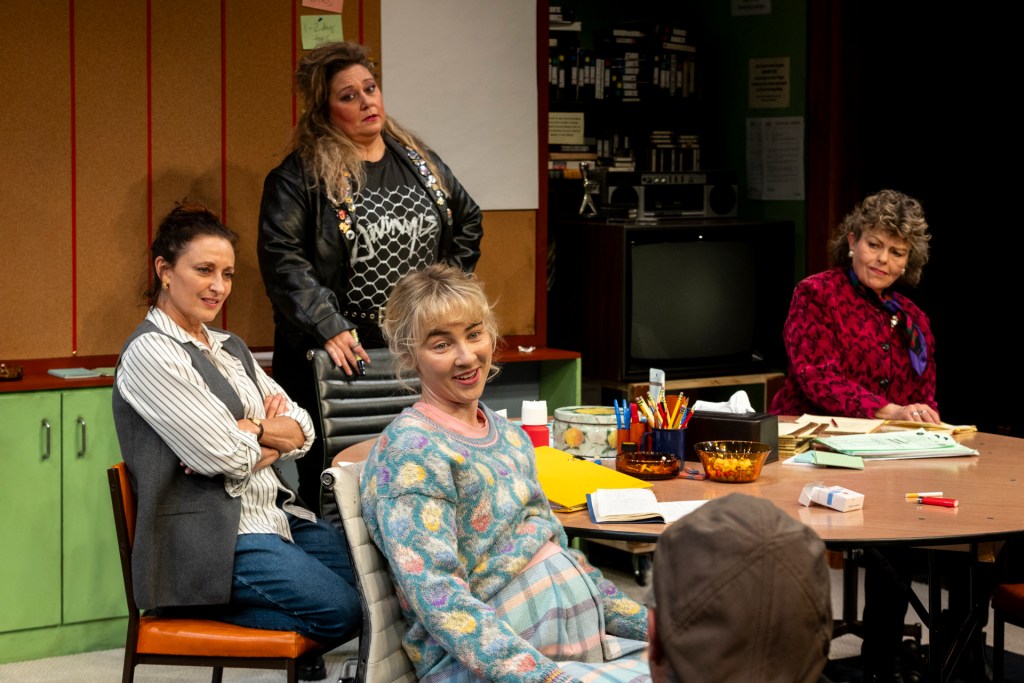
This was a play that seemed like a risky concept on paper, with a storyline that was heavily context-specific and based upon a soap opera that finished over 30 years ago. Yet, Tait not only made the story work but has created a truly special piece of theatre that combines emotion, incisive commentary and biting Aussie humour into a production that feels so Australian and yet speaks to themes that touch everyone across the world. This play is a masterpiece and is full of so much heart, soul and love that it connected with everyone in the room on opening night, leading to a rousing standing ovation. Tait has captured something special in this work and for all theatre fans in Sydney, this is not one you will want to miss.
Rating: ★★★★★
How to Plot a Hit in Two Days plays at the Ensemble Theatre until 11th October. For more information, click here.
All photo credits: Brett Boardman

 Musicaltheatre.au - Australian music and theatre reviews