
The Dictionary of Lost Words has become one of the more acclaimed Australian novels in recent history, with Pip Williams telling the story of the compilation of the very first edition of the Oxford English Dictionary. Now adapted to a play, the production has been touring around Australia before making its way to Sydney for a brief season at the Roslyn Packer Theatre.
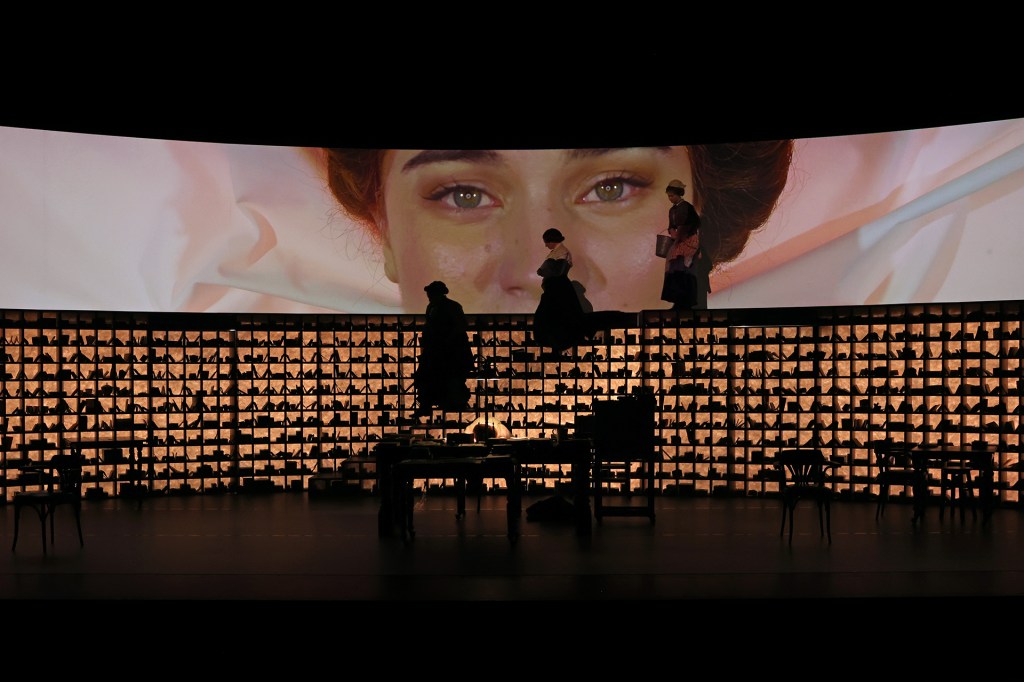
One of the most immediately striking things about the production was the set, designed by Jonathon Oxlade. The production featured a wall of books at the back of the stage, each meticulously set and glued to bookshelves for the characters to interact with during the show. It was a truly evocative set design, taking the audience immediately into the world of the production and is even more commendable given the touring nature of the set.
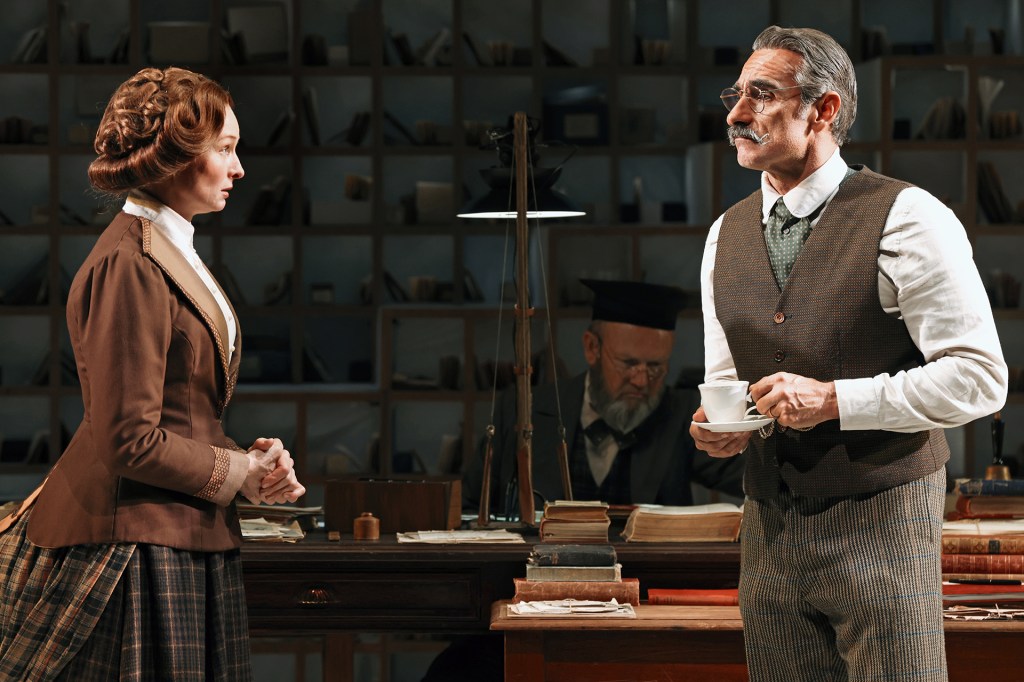
The production, directed by Jessica Arthur, also relied heavily on the use of cards, which were handled by the actors and projected onto a screen behind the stage to narrate the action. This was also incredibly well done, serving as a unique way to tell the story and provide additional context for the largely minimalist acting choices on stage (which were very much by design and in keeping with the tone of the play).

The play told of the creation of the Oxford English Dictionary through generations but mainly focussed on Esme Nicholl, the daughter of a lexicographer who fell in love with words from a young age. The play then transformed into an exploration of gender and the role of language in defining gender as Esme sought to create a book of lost words, typically associated with womanhood, that had been omitted from the dictionary. While her life was ultimately short-lived, the play demonstrated how the legacy of the character managed to live on.

Shannen Alyce Quan was very much the star of the production, with a commanding performance as Esme, charting the transformation from her four-year-old self to womanhood superbly. Quan has a fantastic grasp of emotional range as an actor and she used all of that expertise to bring the audience into the world of Esme and empathise with her through her various iterations (and generations). The supporting cast were also very strong, with Johnny Nasser another highlight as the soft-spoken but loving father of Esme and Ksenja Logos, who provided the comic punctuation as Mabel to drive the story, also being fantastic.
The play was clever and had a lot of insightful things to say about gender in particular but started to drag, especially in the second act, as it reached close to its nearly 3-hour runtime. The plot was slightly repetitive, which meant that some connection with the audience was lost at times and it felt like the historical element of the production could have been more insightfully explored, with more glimpses into the time period perhaps being of benefit.
Ultimately, this was a strong show, with a great degree of skill displayed by those on stage in a challenging work. The play was insightful and was an interesting commentary on gender but it perhaps could have been more radical and concise in its approach. This is a production that will very much interest fans of the book and those interested in the craft of performance, as both the acting and production values in the performance were very high. After a number of tours, it is hard to say whether the production will be back for a little while, but it is safe to say that we will see the superb performers, many of whom were debuting in Sydney Theatre Company productions, back on the stages of Walsh Bay very soon.
Rating: ★★★★
The Dictionary of Lost Words plays at the Roslyn Packer Theatre until 22nd March. For more information, click here.
All photo credits: Prudence Upton

 Musicaltheatre.au - Australian music and theatre reviews