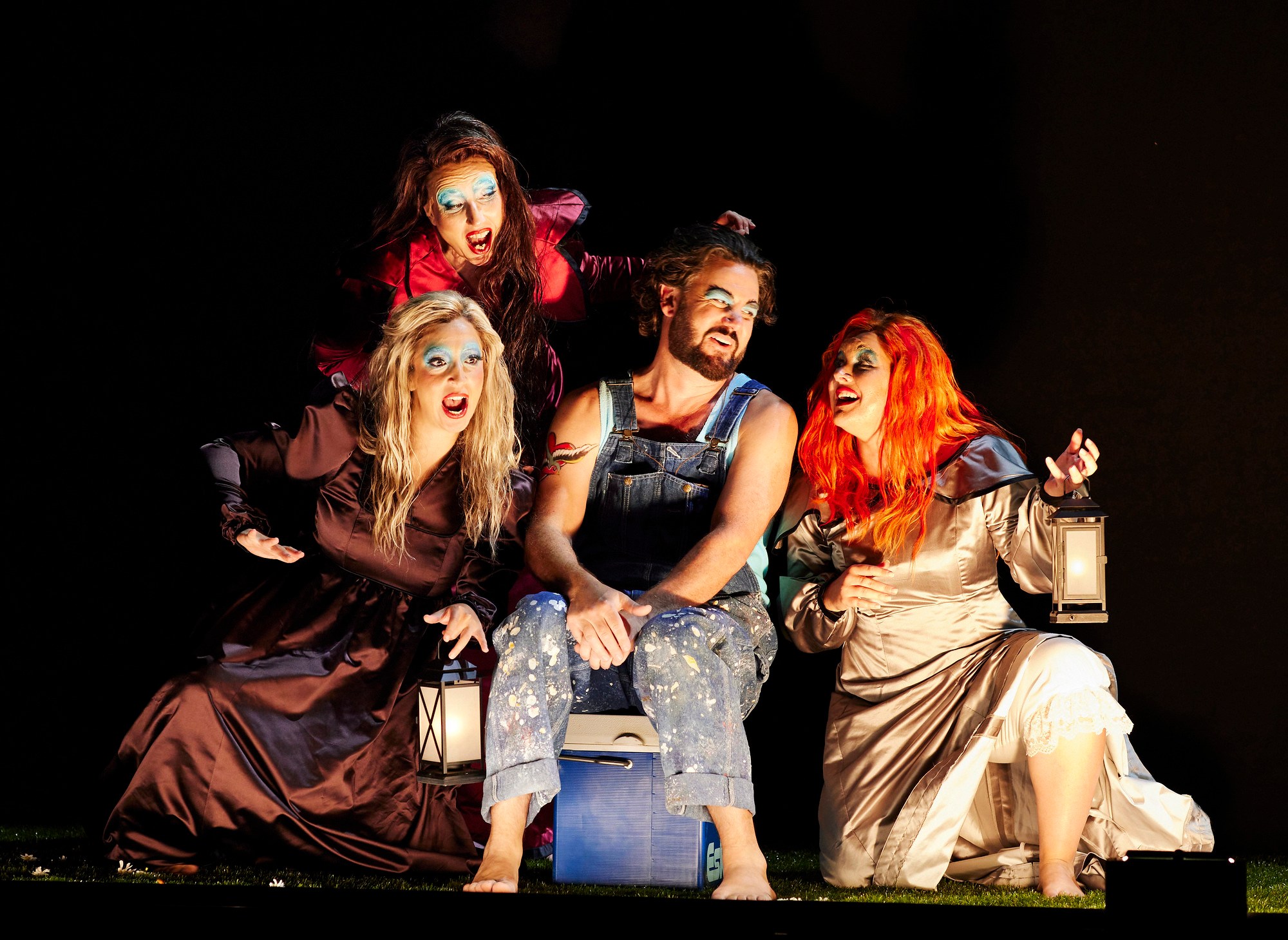
The Magic Flute is one of the most loved operas in the Western canon. Part of the reason it is loved is the familiarity which it brings to audiences, being the last opera composed by Wolfgang Amadeus Mozart. Yet this was an opera that bore little resemblance to that which Mozart composed centuries ago, as director Kate Gaul completely reimagined the opera for a modern-day audience. This was a daring move but ultimately an inspired choice which paid off in almost all aspects.
My immediate thought when watching this performance was that it was a trial run for next year’s Handa Opera on Sydney Harbour. Appealing to a younger, more diverse audience, it featured all of the bombastic whimsicality that the Handa Opera has become known for. It could fit right onto that stage. Performing in English, and with some script changes to bring the production into modern Australia, it made it much easier for modern audiences to identify and connect with, which is only a positive thing.
With that said, it was clear that some of the opening night attendees (many of whom would be long-term donors and subscribers to Opera Australia) were quite shocked by the production. Ultimately, I think that this was a risk worth taking. Opera Australia still adheres to relatively faithful adaptations throughout the season and a risk now and again to bring in new audiences is quite important. While this performance might be a little shocking for some, eventually it will receive the accolades that it deserves.
While the production almost resembles more of a musical theatre performance at times, there is no doubt that the quality of the singing in the production was as strong as any other Opera Australia work. Giuseppina Grech’s Queen of the Night aria (one of the most difficult songs in any opera to perform) was absolutely stunning and left the audience spellbound. David Parkin was superb as Sarastro, showcasing power and a rich, velvety bass tone. Ben Mingay and Michael Smallwood were fabulous in playing off each other as Tamino and Papageno and Stacey Alleaume showcased incredible skill as Pamina.
The staging was minimalist, but this added to the more modern ambiance of the production, making it feel more real and engendering greater connection with the audience. The orchestra was also stunning, as it always is, adding to the fullness of the production.
While the performance was bold and daring, which is important as opera continues to evolve, the balance between traditionalism and modernity in the second act began to become slightly unstuck. The audience seemed to lose the production slightly as the secondary story between Pamina and Papageno developed given that the staging made the interpretation slightly confusing. Additionally, some of the acting felt a little stilted at times, which is less noticeable in a traditional opera but given that the production team decided to blur the lines between opera and musical theatre, some more attention to theatre-style acting might have been warranted.
Ultimately, as demographics shift and opera continues to evolve, risks like this are necessary to ensure the continued survival of the art form. Accordingly, I commend Opera Australia for their bold choices in this production as it was really like no other. While not every choice paid off, this created a highly enjoyable (and indeed, novel) experience overall which I think will translate well as younger audiences seek out the opera and possibly, as it continues to develop onto other stages (like the Handa Opera on Sydney Harbour). This is a production to see if you want to see the opera do something different or even just something that begins to push the boundaries. It is a fabulous production and will undoubtedly create some intrigue as the season progresses.
Rating: ★★★★ 1/2
The Magic Flute plays at the Joan Sutherland Theatre until 16th March. For more information click here.
Photo credit: Keith Saunders

 Musicaltheatre.au - Australian music and theatre reviews